

8 Best Manufacturing Marketing Agencies in 2026

What’s in This Blog?
- Introduction
- Top 8 Manufacturing Marketing Agencies to Know in 2026
- How to Choose the Best Manufacturing Marketing Agency
- Wrap Up
Most manufacturing teams invest in marketing. Few see a clear return.
The issue rarely comes from effort or budget. It comes from choosing the wrong agency. Many agencies look strong on paper, then struggle with long sales cycles, technical buyers, and offline revenue attribution. Experience exposes that gap fast.
After working with manufacturers across industrial, OEM, and custom fabrication spaces, one pattern keeps repeating. Agencies built for ecommerce or SaaS fail when deals take months and engineers drive decisions. Agencies built for manufacturing think differently. They prioritize clarity, trust, and momentum across the full buying journey.
This post breaks down the 8 best manufacturing marketing agencies in 2026 based on real criteria. Buyer alignment. Sales cycle fit. Technical depth. Execution discipline. You will see what each agency does well, where they shine most, and how teams typically use them.
Top 8 Manufacturing Marketing Agencies to Know in 2026
Manufacturing marketing has reached a point where most agencies look the same on paper. This list cuts through that and focuses on the firms that consistently deliver real outcomes for manufacturers in 2026.
Thecommerceshop
- Best for: Manufacturers running ecommerce or hybrid DTC and B2B models, teams scaling paid media, organizations demanding revenue accountability
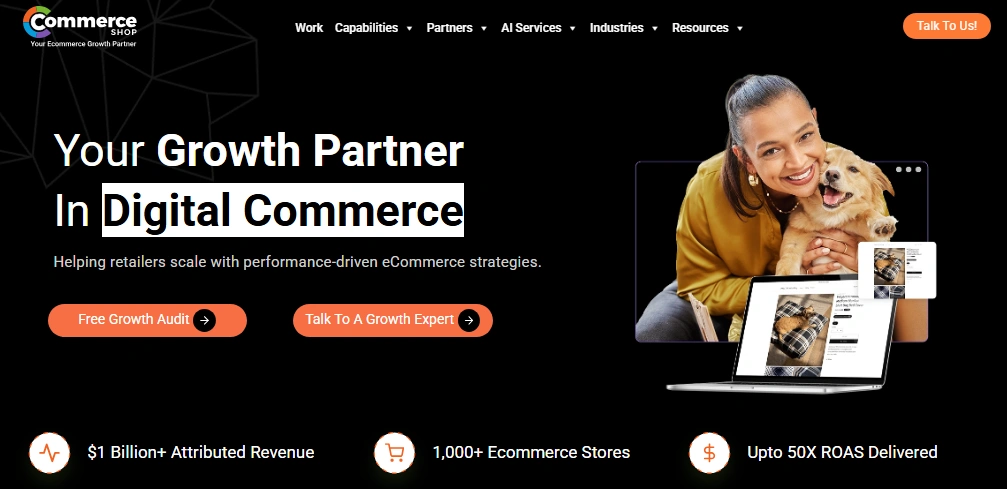
TheCommerceShop sits at the top of this list for its ability to tie digital execution directly to revenue performance. Their strength lies in paid acquisition, technical SEO, and conversion optimization, giving manufacturers clear visibility into what drives growth and efficiency in digital channels.
They bring strong discipline around attribution, funnel efficiency, and on-site behavior analysis, providing leadership teams with clarity on what drives growth and what drains their budget. In 2026, that level of accountability separates serious partners from creative vendors.
Their strength centers on performance and commerce execution. Manufacturers running extended, tender-led sales cycles gain the best results when this capability complements a dedicated technical content or sales enablement function.
Real-world signal
“I’m most impressed with The Commerce Shop’s commitment to pleasing the customers. They work in a detailed and thorough way and come up with ideas I haven’t thought about. The Commerce Shop is obsessed with delivering perfect work.”
| Pros | Cons |
|---|---|
|
|
Also Read: B2B Conversion Rate Optimization: The Ultimate Guide for Manufacturers
Altitude Marketing
- Best for: Inbound-led manufacturers, complex engineered products, long research-driven sales cycles
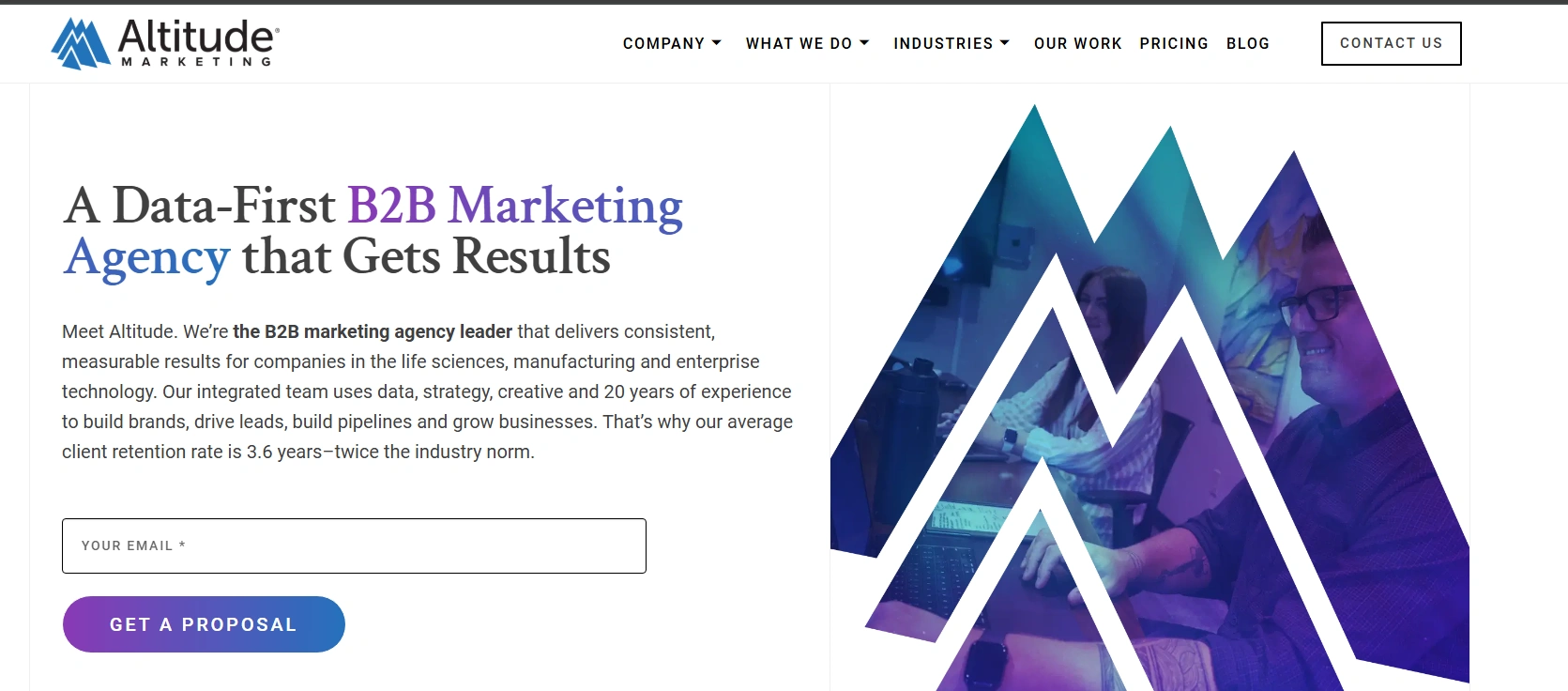
Altitude Marketing focuses heavily on industrial and manufacturing demand generation through SEO, technical content, and inbound strategy. Their strength lies in building credibility with engineers and procurement teams during long research cycles where trust and clarity influence decisions.
Their model lacks urgency. Performance acceleration, paid media scaling, and conversion engineering remain secondary. Growth depends heavily on time, consistency, and content volume, which limits short-term impact and flexibility when revenue pressure increases.
Real-world signal
“I worked with Altitude Marketing for over 8 years, and it was one of the best experiences. They are a hands-on, full-service marketing agency that helped us completely transform our corporate brand.”
| Pros | Cons |
|---|---|
|
|
Gorilla 76
- Best for: Brand-led industrial growth, complex positioning challenges, manufacturers investing in long-term differentiation
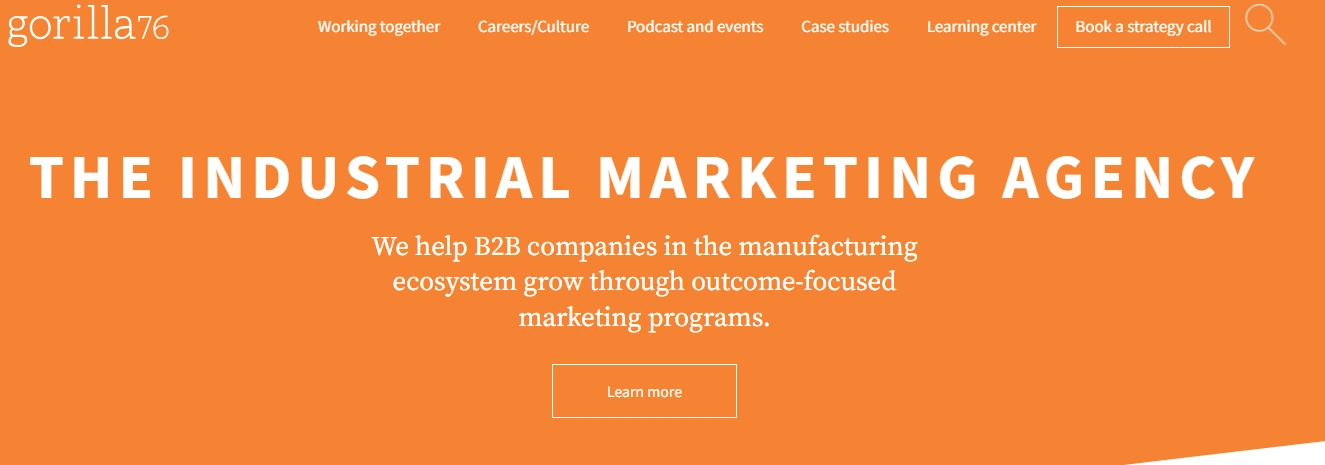
Gorilla 76 is recognized for its industrial brand positioning and content systems designed for manufacturing audiences. Their strength shows in clarifying complex offerings, tightening messaging, and building consistent visibility across long buyer journeys where differentiation depends on clarity rather than volume.
Their work emphasizes strategy, messaging, and content foundations. Lead velocity, paid performance scaling, and conversion optimization receive less attention. Teams under short-term revenue pressure may experience slower commercial impact without additional performance-focused support.
Also Read: 5 Digital Marketing Strategies Manufacturers Can Use to Stay Competitive Online
Real-world signal
“We were able to attribute $800,000 in revenue to leads Gorilla helped generate through our marketing efforts.”
| Pros | Cons |
|---|---|
|
|
Industrial Strength Marketing
- Best for: BIndustrial manufacturers modernizing legacy marketing, teams needing structured execution, companies selling engineered products through long evaluation cycles
Industrial Strength Marketing is an agency built specifically around industrial and manufacturing markets. Their work focuses on positioning, messaging, content, and digital programs designed to support how industrial buyers research, compare, and justify purchases internally.
Their value lies in structure and familiarity with industrial realities. They help teams replace outdated marketing with clearer messaging, cleaner websites, and steady demand programs that sales teams can actually use. For manufacturers coming from traditional or fragmented marketing setups, this often creates immediate operational clarity.
Real user feedback
Clients often point to their industry familiarity and organized delivery as strengths, especially for teams transitioning from legacy marketing approaches. Feedback tends to emphasize reliability and clarity over aggressive growth acceleration.
| Pros | Cons |
|---|---|
|
|
First Page Sage
- Best for: SEO-led growth strategies, revenue teams tracking pipeline attribution, brands competing on high-intent keywords
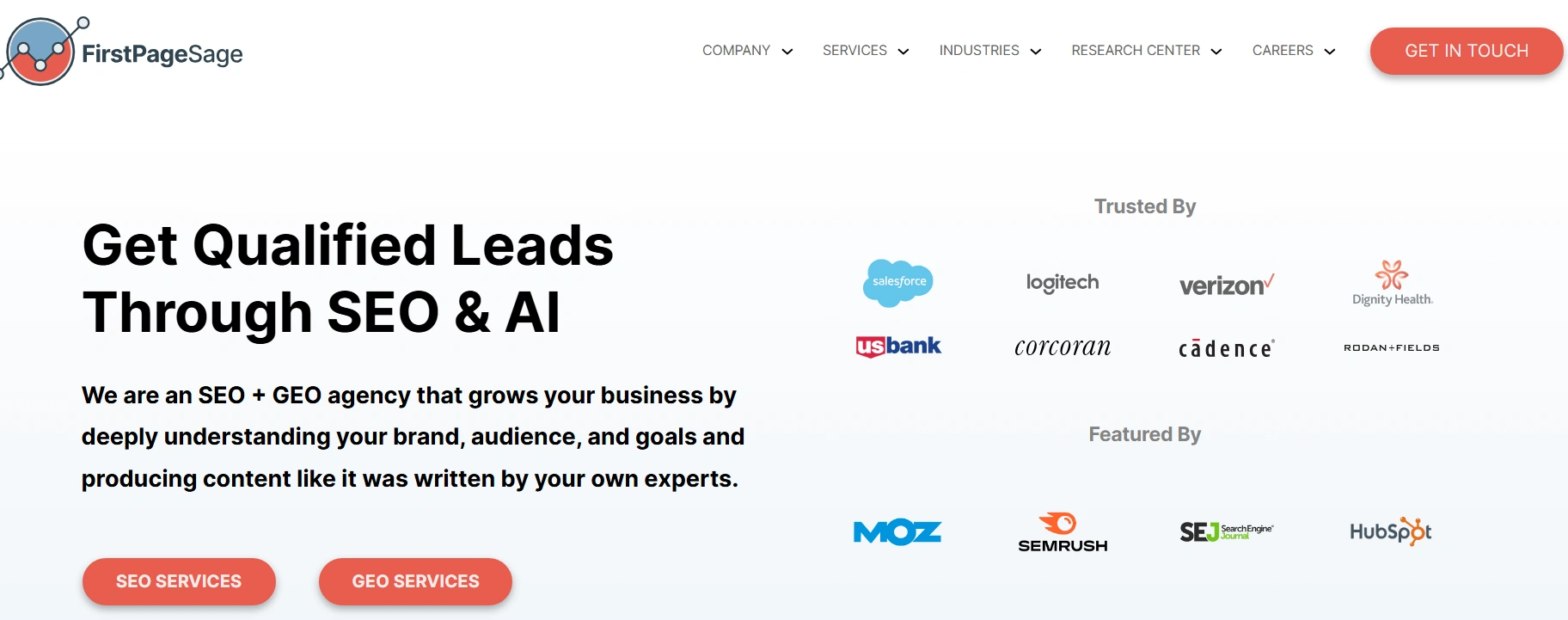
First Page Sage is a B2B SEO agency built around long-term keyword ownership and revenue attribution. Their work centers on research-driven content systems designed to capture demand during extended evaluation cycles common in manufacturing and enterprise buying.
Their value lies in tying organic visibility to pipeline contribution rather than surface-level traffic gains. This makes them attractive to leadership teams that expect SEO to support revenue forecasting and sales alignment.
Companies comparing generalist SEO agencies often shortlist First Page Sage when organic search serves as a primary growth engine rather than a supporting channel.
Real-world signal
“I worked with First Page Sage for 3 years across two companies I was at, and they are far and away the best at SEO that I’ve come across.”
| Pros | Cons |
|---|---|
|
|
Windmill Strategy
- Best for: Manufacturers rebuilding their website as a demand asset, teams prioritizing SEO and buyer journeys, organizations with complex offerings that sales struggles to explain online
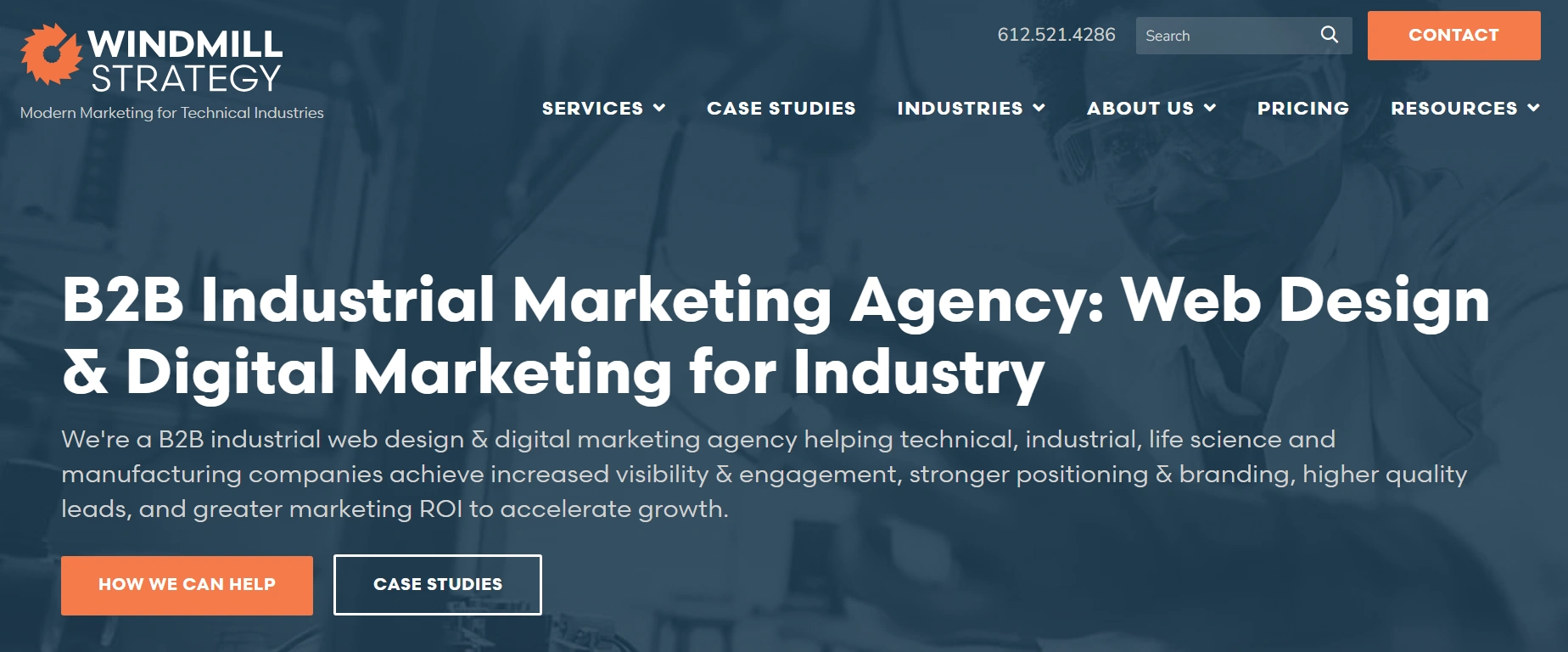
Windmill Strategy focuses on turning manufacturing websites into sales support tools rather than brochureware. Their work sits at the intersection of website strategy, SEO, and content architecture, with a strong emphasis on how buyers navigate, compare, and take action.
Windmill fixes fundamentals first, like information hierarchy, buyer-path clarity, and search visibility, then layers content to support those paths.
Teams usually evaluate Windmill Strategy when website performance limits lead to quality issues or when organic traffic exists but fails to convert into real opportunities.
Real-world signal
“We were very happy with our experience working with your team from Windmill. The professionalism, scheduling, and clear communication were all appreciated.”
| Pros | Cons |
|---|---|
|
|
Wolfable
- Best for: Manufacturers seeking a scalable full-service partner, teams needing execution across many channels, organizations that want process and capacity over experimentation
Wolfable positions itself as a manufacturing-focused growth agency with roots in large-scale digital execution. Their model emphasizes repeatable systems across SEO, paid media, content, and web, making them suitable for manufacturers that need consistent output across multiple product lines or locations.
Their value comes from scale and process. Wolfable can deploy campaigns quickly, manage ongoing production volume, and maintain operational consistency.
Manufacturers typically consider Wolfable when internal teams lack bandwidth or when leadership wants a single partner handling multiple digital functions under one operating model.
Real-world signal
“Wolfable’s team acts as true partners. They don’t just execute; they strategize. Their work on our brand identity and lead generation has been transformative.”
| Pros | Cons |
|---|---|
|
|
WebFX
- Best for: Large manufacturers needing scale, teams outsourcing execution volume, organizations comfortable with standardized processes
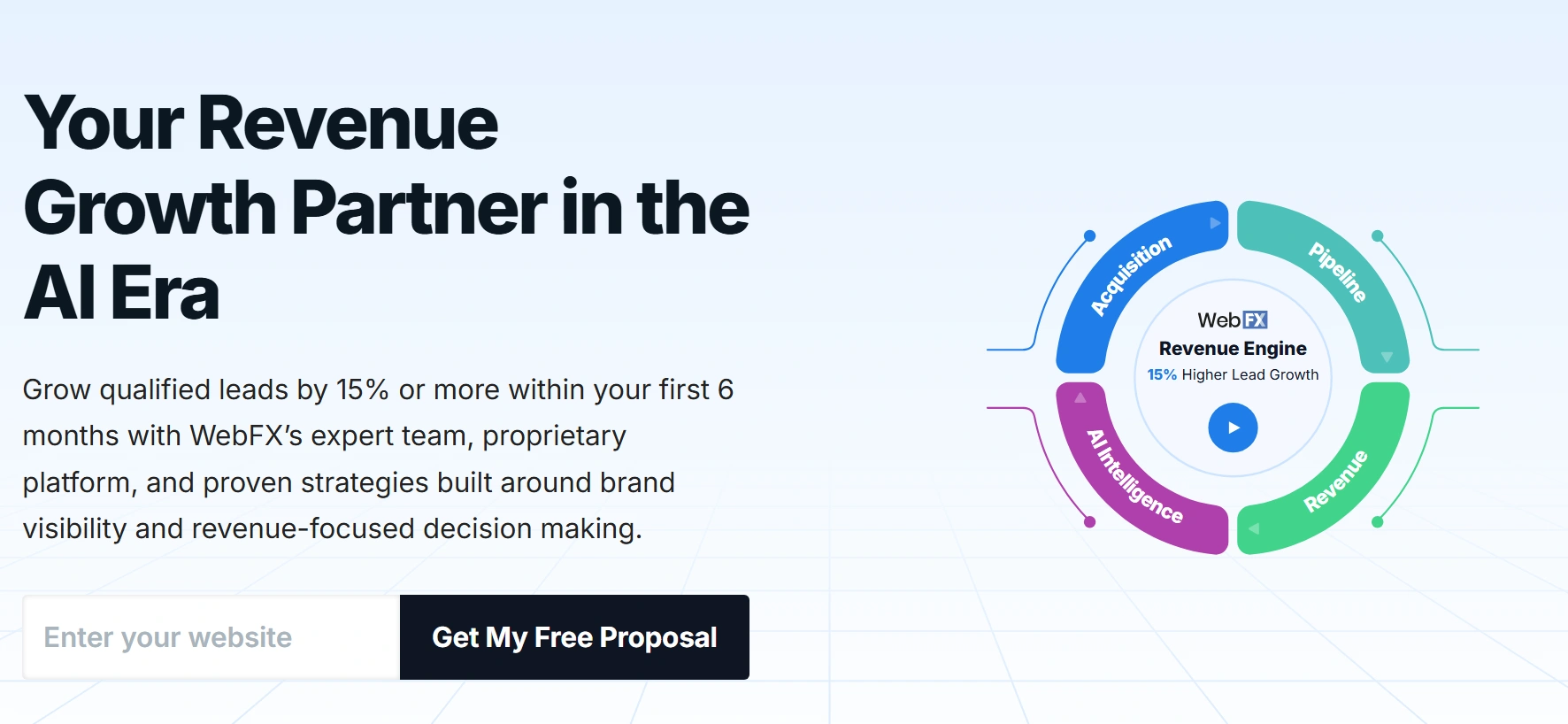
WebFX operates as a large, systems-driven digital marketing agency with broad coverage across SEO, paid media, content, and analytics. Their strength lies in operational scale. They can deploy campaigns quickly, manage high volumes of pages and ads, and maintain consistent reporting across complex accounts.
WebFX brings established playbooks, proprietary tools, and a large delivery team that reduces dependency on internal bandwidth. For organizations managing multiple brands, locations, or product lines, consistency matters.
Manufacturers usually evaluate WebFX when leadership prioritizes coverage, throughput, and predictable delivery over deep industry customization.
Real-world signal
“They have skillfully mastered the art of keeping clients informed, making complex SEO projects accessible.”
| Pros | Cons |
|---|---|
|
|
How to Choose the Best Manufacturing Marketing Agency
Use the steps below to make a clear, defensible decision. Each step reflects how manufacturing buyers actually evaluate partners, not how agencies pitch themselves.
Step 1: Map your revenue path before talking to agencies
Start with how money enters the business. Direct ecommerce, RFQs, distributors, channel partners, or long enterprise deals each require different marketing mechanics. Agencies that succeed in one model struggle in others. Lead with your revenue reality and filter agencies that match it.
Step 2: Test their understanding of industrial buyers
Ask how they approach engineers, procurement teams, and multi-stakeholder buying committees. Strong agencies describe research behavior, evaluation triggers, and internal justification steps. Shallow answers reveal surface-level manufacturing exposure.
Step 3: Ask for proof tied to pipeline outcomes
Skip traffic charts. Request examples showing impact on RFQs, qualified leads, pipeline value, or revenue contribution. Look for timelines, context, and constraints. Real experience includes tradeoffs and course corrections.
Step 4: Evaluate who actually executes the work
Clarify who writes technical content, manages paid campaigns, and owns analytics. Meet the execution team early. Strong strategy fails when delivery depends on junior or rotating resources.
Step 5: Check alignment with long sales cycles
Manufacturing deals take time. Ask how they support buyers during extended evaluation phases and how progress gets measured before deals close. Look for sales enablement, retargeting logic, and mid-funnel indicators.
Step 6: Define ownership and accountability upfront
Confirm who owns lead quality, handoff to sales, reporting cadence, and optimization decisions. Clear boundaries prevent confusion and protect both sides from missed expectations.
Step 7: Run a paid pilot before long commitments
Start with a focused pilot around one product line or market. Use it to assess communication, execution speed, and problem-solving quality. A short test reveals more than polished proposals.
Step 8: Choose realism over optimism
The right agency challenges assumptions, flags risk, and sets grounded timelines. Confidence paired with constraint signals maturity and long-term value.
The best manufacturing marketing agency fits your revenue model, understands industrial buying behavior, executes reliably, and ties effort to outcomes that matter to sales and leadership.
Wrap Up
Choosing a manufacturing marketing agency comes down to alignment, not popularity.
The right partner understands your buyers, your sales cycle, and where marketing actually influences revenue.
Use this list as a starting point, then pressure test each agency against your internal goals and constraints. What works in 2026 favors clarity, consistency, and execution over noise.


